
Why Data Quality is a Business Imperative: The Hidden ROI of Clean Data
In today’s enterprise landscape, commercial decisions, strategic expansion, and daily operations rely heavily on the information flowing through modern data ecosystems. However, the business value of these technical investments is directly proportional to the underlying quality of the data itself.
When enterprise data is accurate, complete, timely, and consistent, it empowers workforce productivity, accelerates executive decision-making, and builds customer trust [DAMA International, DMBOK2]. Conversely, when data quality degrades, the financial and operational consequences ripple across every business unit.
Data quality is not a back-office IT issue—it is a core business performance imperative [ED Council, DCAM v2].
The True Cost of Poor Data Quality
Bad data is rarely an abstract technical flaw; it is an expensive operational failure. Industry benchmarks indicate that organizations lose between 15% and 25% of operating revenue addressing the downstream impacts of poor data quality [TDWI, Analytics Maturity Model].
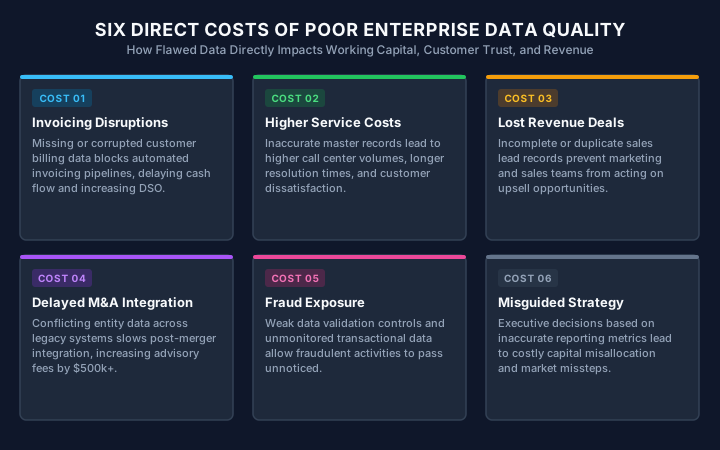
1. Cash Flow Disruptions and Invoicing Failures
Incorrect customer billing address fields, unvalidated tax codes, or missing purchase order numbers prevent automated invoicing pipelines from executing correctly. Invoices stall in manual review queues, extending Days Sales Outstanding (DSO) and directly restricting enterprise working capital.
2. Inflated Customer Service Expenditures
When customer master records are fragmented or outdated, service teams struggle to access a complete interaction history. This leads to higher call volumes, longer average handle times, and increased operational costs required to resolve avoidable customer complaints.
3. Revenue Loss and Missed Commercial Opportunities
Incomplete, duplicate, or stale lead data prevents sales and marketing teams from executing targeted upsell or cross-sell campaigns. Potential deals slip to competitors simply because customer contact attributes or firmographic data were unmanaged.
4. Integration Friction in Mergers and Acquisitions (M&A)
During corporate M&A activity, conflicting data schemas and duplicate entity records across legacy systems severely delay integration timelines. Months spent on manual data reconciliation consume millions of dollars ($500,000+ in extra advisory fees) and postpone anticipated operational synergies.
5. Heightened Fraud and Compliance Exposure
Weak data validation controls and unmonitored transactional data create systemic vulnerabilities. Inconsistent records make it vastly easier for internal or external fraudulent activities to slip past automated compliance monitors unnoticed.
6. Faulty Strategic Decision-Making
When executive dashboards aggregate unvalidated or corrupted data, leadership makes high-stakes decisions based on false assumptions. Miscalculating customer churn, overestimating regional market demand, or misjudging operational costs can lead to catastrophic capital misallocation.
Quantifying the Value of High-Quality Data
When an organization treats data quality as a continuous, governed discipline, the business benefits compound across the entire operation [Gartner, Data Governance Framework]:
| Business Capability | Impact of Low Data Quality | Value Delivered by High Data Quality |
|---|---|---|
| Decision Velocity | Delayed decisions due to manual data verification and reconciliation. | Real-time, confident decision-making backed by trusted data pipelines. |
| Workforce Productivity | Analysts spend up to 80% of their time cleaning and prepping raw data. | Teams shift focus from manual data firefighting to strategic analysis. |
| Customer Experience | Inconsistent communications, billing errors, and customer friction. | Personalized, accurate, and seamless service delivery across all touchpoints. |
| Risk Management | Regulatory compliance fines, audit failures, and security vulnerabilities. | Audit-ready compliance reporting and proactive risk mitigation. |
Data Quality as a Strategic Priority: Governance in Action
Achieving and sustaining high data quality requires more than deploying automated validation tools—it demands an organizational framework of explicit accountability.
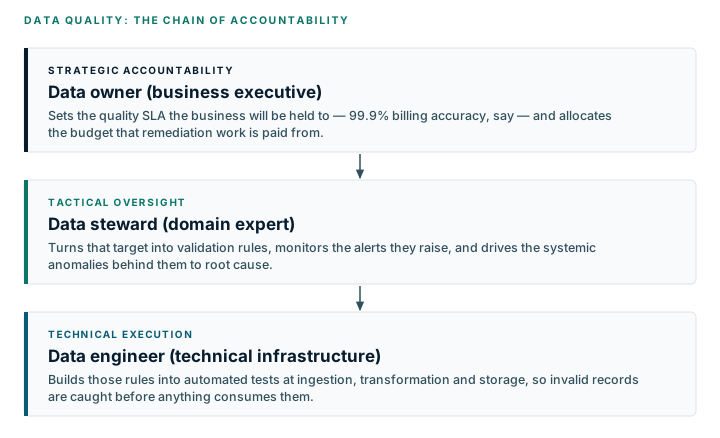
- Explicit Domain Ownership: Business leaders (Data Owners) must define what "high quality" means for their domain attributes, set acceptable error thresholds, and approve remediation resources.
- Dedicated Operational Stewardship: Functional subject matter experts (Data Stewards) actively manage business glossaries, investigate automated quality alerts, and drive root-cause remediation workflows.
- Automated Pipeline Guardrails: Technical teams (Data Engineers) embed automated quality checks directly into data pipelines to capture, log, and isolate invalid records at ingestion before they corrupt downstream analytical models.
Building a Business-Driven Quality Roadmap
Transforming data quality from an abstract concern into a driver of enterprise performance requires a pragmatic, step-by-step approach:
- Calculate Your Cost of Bad Data: Audit a core operational process (such as Order-to-Cash) to quantify the financial impact of current data errors in direct labor costs and delayed revenue.
- Focus on High-Impact Domains: Prioritize critical master data domains—such as Customer, Product, or Vendor—that directly influence customer experience and financial reporting.
- Embed Quality Checks in Pipelines: Deploy automated validation rules at the point of ingestion to catch structural and semantic errors before data reaches production storage.
- Establish Data Quality SLAs: Define explicit Service Level Agreements (SLAs) for data freshness, completeness, and accuracy between data producing and consuming teams.
- Monitor and Publish Quality Metrics: Implement automated data quality dashboards to provide transparent, continuous visibility into data health for business stakeholders.
Ready to Evaluate Your Data Governance Foundation?
Is poor data quality quietly impacting your organization's financial performance and operational agility? Take our quick diagnostic assessment to evaluate your data health and receive an actionable improvement roadmap.