
Practical Data Governance course
Sixteen video lessons, in Portuguese with English subtitles, on how to get a governance programme off the ground — from the one-page canvas to a committee that actually decides — plus 31 editable templates, 5 of them from the add-on AI Governance module.
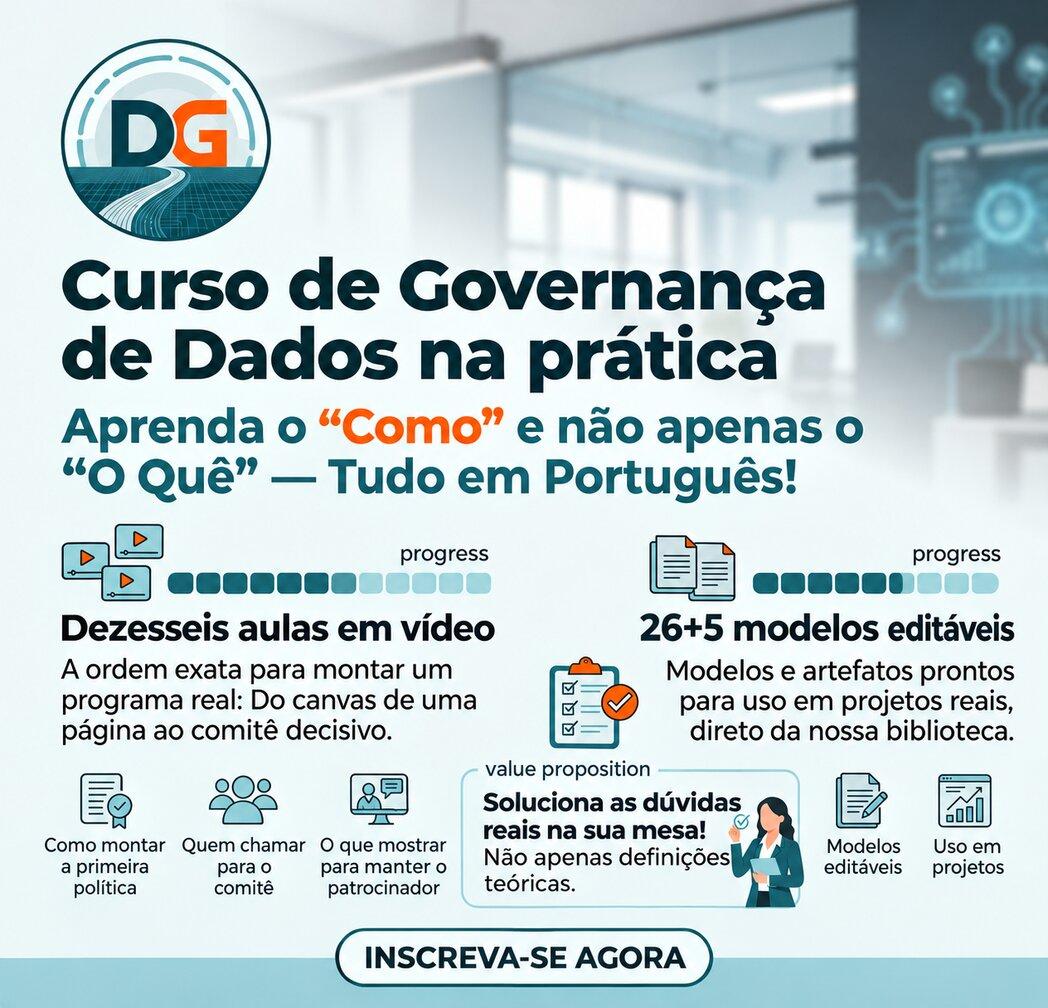
The videos are in Portuguese, with English subtitles. The templates and course materials are in Portuguese.
There is plenty of good material on data governance. Most of it is written for companies that already have a Chief Data Officer, an approved budget and three people dedicated to the subject. None of it answers the question that lands on your desk: how you put together the first policy, who you invite to the committee, and what you show at the next meeting so you do not lose your sponsor.
This course is that part. It follows the order a programme is really built in, with the artefacts I open on client projects.
You finish with more than theory: you leave with a strategy and a clear path to follow to implement data governance in your company, or to improve the one you already have — what to do first, with whom, with which artefacts and how to tell whether it is working.
The method is the Data Governance Journey methodology, the same one set out on this site, based on and guided by the DAMA-DMBOK framework, DAMA International's body of knowledge for data management. The course's three sections are the methodology's three pillars — the Compass, the Engine and the Heart — and each lesson takes what the DMBOK describes into the practice of a real programme.
Before anything else: the course is in Portuguese, the language it was made in, and the videos have English subtitles. The templates and downloadable materials inside the course are in Portuguese too. If that works for you, read on; if not, everything free on this site is in English and you do not need the course to use it.
Full course
R$199
One-time payment, with lifetime access to every lesson and template.
Enrol nowThe link opens the Hotmart checkout. The price is shown in your local currency, converted from R$199 (Brazilian reais).
What's included
- By the end, a strategy and a clear path to implement or improve data governance in your company
- 16 video lessons in Portuguese, with English subtitles — watch at your own pace
- 31 editable Excel and Word templates, in Portuguese, 5 of them from the AI Governance module, including the 18 this site's library lists without a link
- Certificate of completion
- Lifetime access, no subscription, no renewal
- Add-on AI Governance module with 5 lessons, offered inside the course
- 7-day guarantee: if it is not for you, request a refund through Hotmart
Why a course, when this site is free
Everything free here stays free: the templates, the playbooks, the cost calculator, the maturity assessment, the simulators, and fifteen years of lessons learned the hard way spread across the articles. Nothing is behind a form and nothing is going to be.
What a free tool cannot do is stay with you. It hands you a spreadsheet and leaves you alone in a meeting room with nine people from four departments who disagree about what a customer is. The course is the order, the context and the decisions: why this artefact before that one, what to do when the business says it has no time, how to score the criticality of a data element without turning it into a six-month project, and how to notice that your committee has turned into a status meeting before it dies of boredom.
Who this is for
For the people who will implement. Analysts and managers who have been handed "set up governance", business people who became owners of a data domain without asking, data teams that have a platform and no agreement, and consultants who need artefacts that survive contact with an executive board. The first section starts from zero, so you do not need to know anything already — you need a real problem to apply it to, and to be comfortable watching lessons in Portuguese with subtitles.
Who this is not for. If you want to prepare for the DAMA exam, the route is different: the CDMP exam practice is free and in English, like the exam. If you are looking for a tool, this course is deliberately vendor-neutral. And if what you need is someone inside your project, in English, that is advisory or a workshop, not a video course.
The three sections
In the order a programme is really built: first you decide where you are going and with what authority, then you get the engine running, and then — the part usually treated as optional, and where everything falls apart — you persuade people to ride in it. These are the three pillars of the Data Governance Journey methodology, guided by the DAMA-DMBOK. The titles are translated; the lessons are in Portuguese with English subtitles.
-
The Compass: data governance fundamentals in practice
The beginning is where most programmes die. This section ends with a project described on one page, a measured baseline, a first policy short enough to be read, a committee with a real mandate, and data domains shared out among business areas that have agreed to own them.
- Introduction to data governance in practice
- Using the 5W2H Canvas to frame a data governance project on a single page
- Set the baseline with a Data Management Maturity Assessment (DMMA)
- Writing your first data governance policy
- How to form the data governance committee
- How to classify data and score its criticality, and why it matters
- How to define data domains and engage the business areas
-
The Engine: operationalising the data governance fundamentals
The part that separates an approved framework from a programme that works. Metadata and catalogue, security and privacy, quality measured with DMAIC and the discipline of "fit for purpose" — plus the hidden gears nobody warns you about until you trip over them.
- From theory to action: operationalising metadata, quality and security
- Metadata and catalogue: the GPS of the data ecosystem
- Data security and privacy: protecting intelligently
- Data quality: the DMAIC method and the practice of "fit for purpose"
- The hidden gears of operationalisation
-
The Heart: data culture and literacy
No policy survives an organisation that does not want to apply it. Change management, engagement, the role of communication, HR and incentives, and data literacy as the precondition for anything resembling a data-driven culture.
- The human factor: why governance is a journey of people
- The heart of the business: change management and engagement
- The fuel of culture change: communication, HR and incentives in practice
- Data literacy: the key to a data-driven culture
AI Governance (AIG)
An add-on module, offered separately inside the course itself. For those who already have the data fundamentals in place and now have to answer for the models: risk classification, use-case planning, privacy in training, algorithmic auditing, and the rights of the person on the other side of the decision.
- The ethical compass of AI governance and risk classification
- The 5W2H Canvas for AI (from use case to plan)
- Synthetic data and privacy by design in training
- The end of the black box: model cards and algorithmic auditing
- The heart of AI: data subject rights, explainability and human-in-the-loop
This module is not included in the price above: it is offered separately, inside the members area, for those who want to move on from data to models.
The full library
The 18 templates the library names and does not hand out, plus 2 extra ones, come with the course
This site's template library has 24 files. 6 are free, in English, for newsletter subscribers, and they stay that way. The other 18 are listed by name and description, without a link: overarching policy, committee terms of reference, classification standard and register, roles and responsibilities, business glossary, catalogue, KPIs, RACI matrix, risk matrix, access definition and log, communication plan, and the rest.
On top of those, the course adds 2 extra templates that are not in the site's library. With the 6 free ones, that makes 26 templates in the main course, and the AI Governance module has 5 more of its own.
They are all delivered in the Hotmart members area as editable Excel and Word files, in Portuguese — the language they were written in — alongside the lesson that explains when each one is useful. A blank template is a file; a template with the conversation it is meant to start is an artefact.
A sample of the templates that come with the course
Five of the templates, as you receive them. The images are screenshots of the real files, not mock-ups, and show the Portuguese originals. Click any of them to see it full size.
-
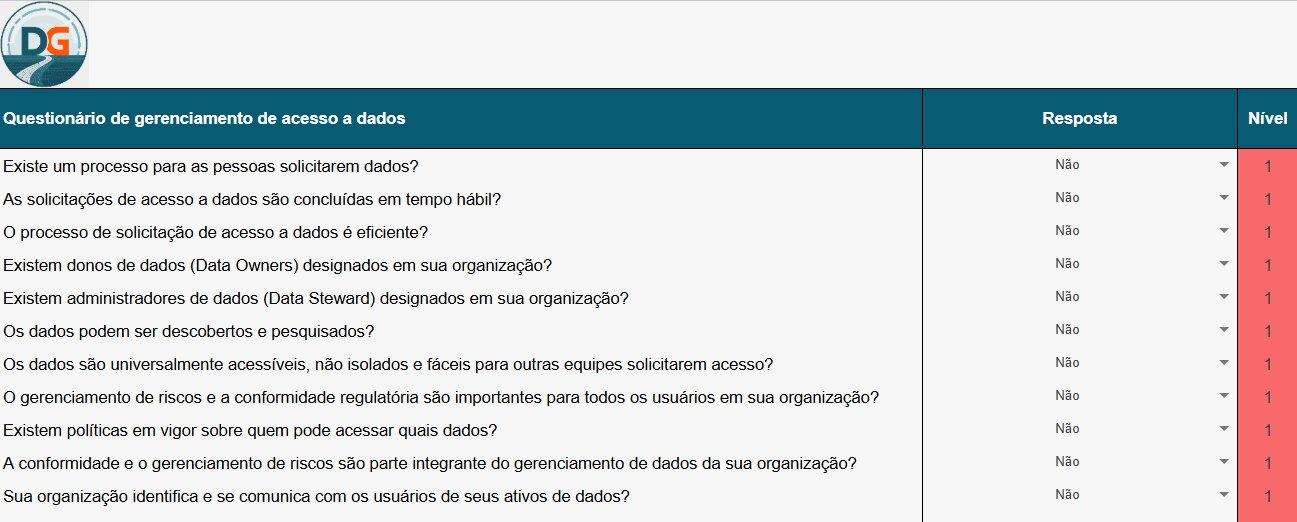
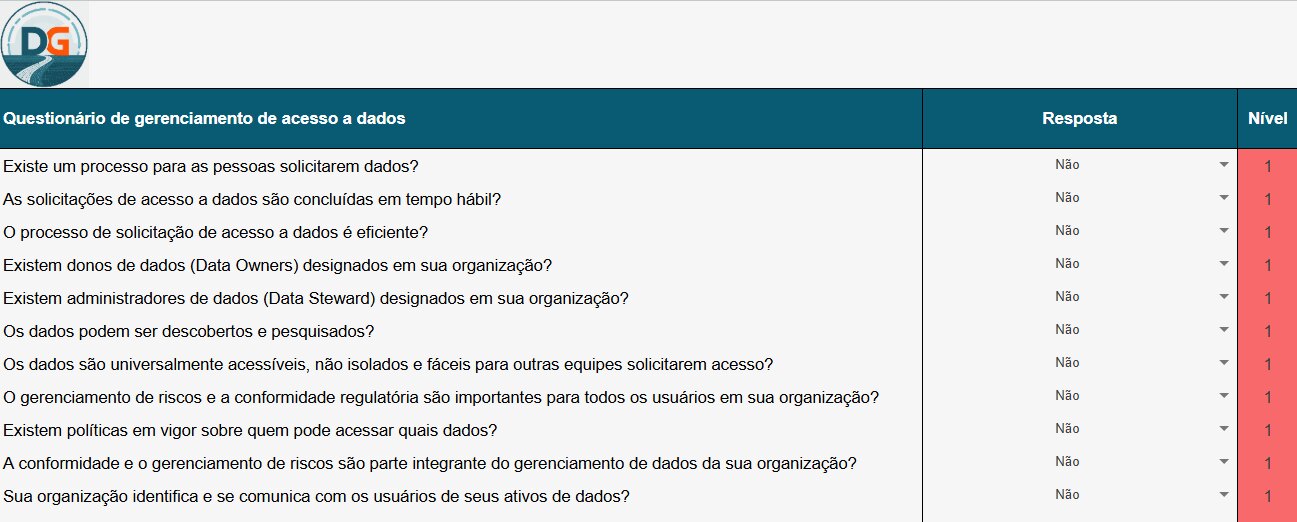
Screenshot of the real template, in Portuguese Maturity assessment workbook
Questionnaires per dimension — data access management, data literacy, IT data management and governance overall — answered from drop-down lists.
- Each answer becomes a level straight away, colour-coded, with no formulas to build.
- The questions are the ones a committee has to answer: are Data Owners and Data Stewards named, is there a policy on who can access what, does the request process work.
-
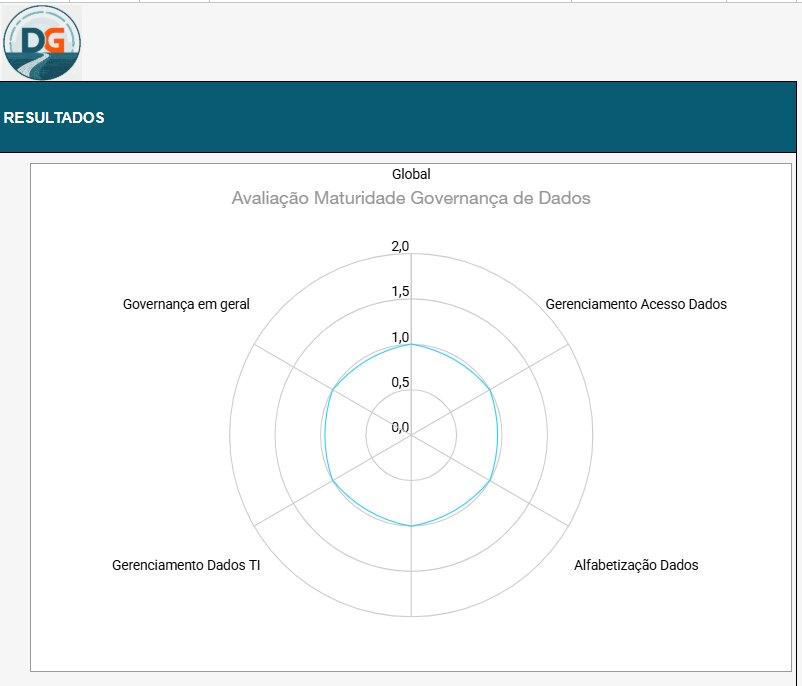
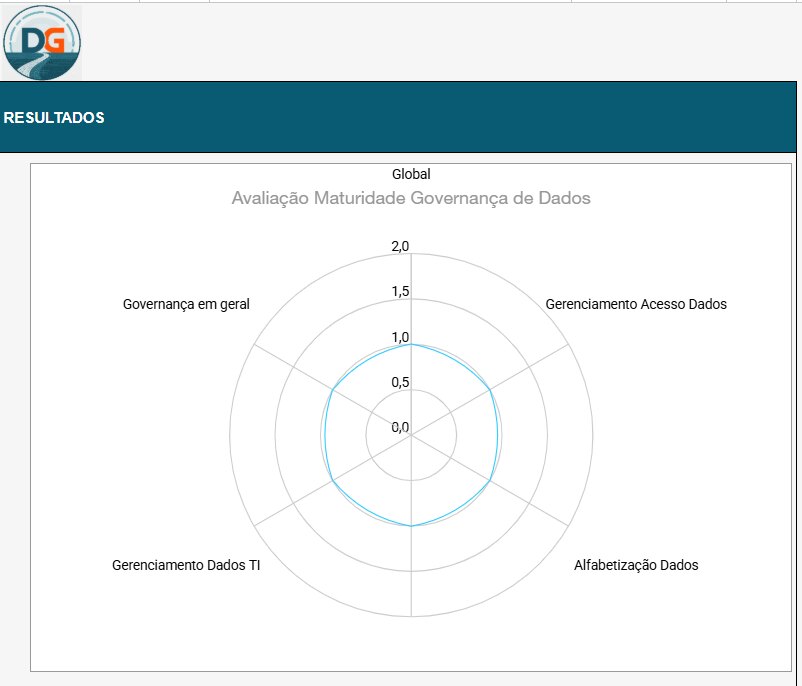
Screenshot of the real template, in Portuguese The assessment result in one chart
The results tab brings the dimensions together in a maturity radar chart, ready for the sponsor presentation.
- Shows at a glance where the programme is weakest and where to start.
- Redone every cycle, it is the simplest way to show progress.
-
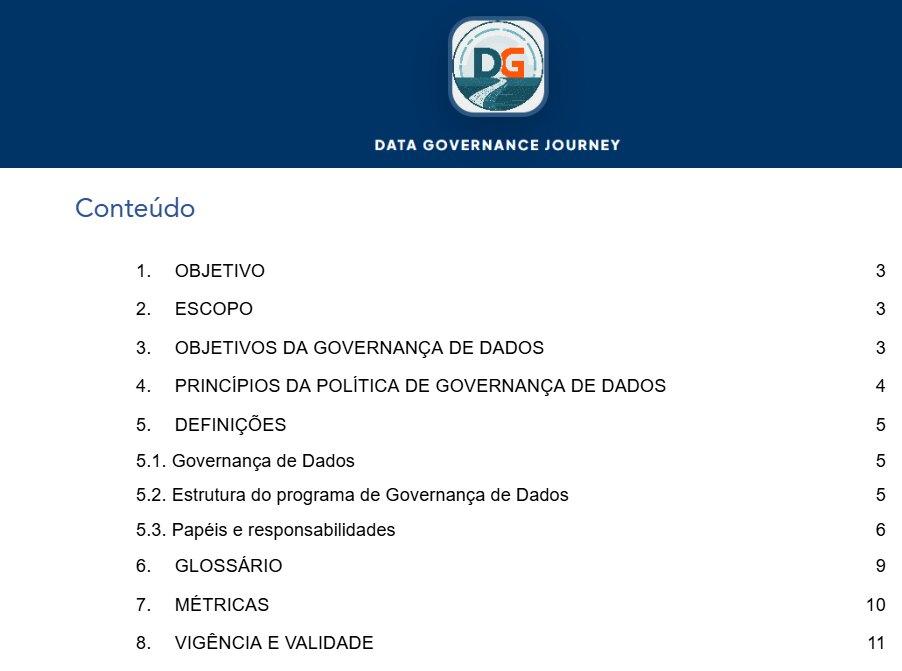
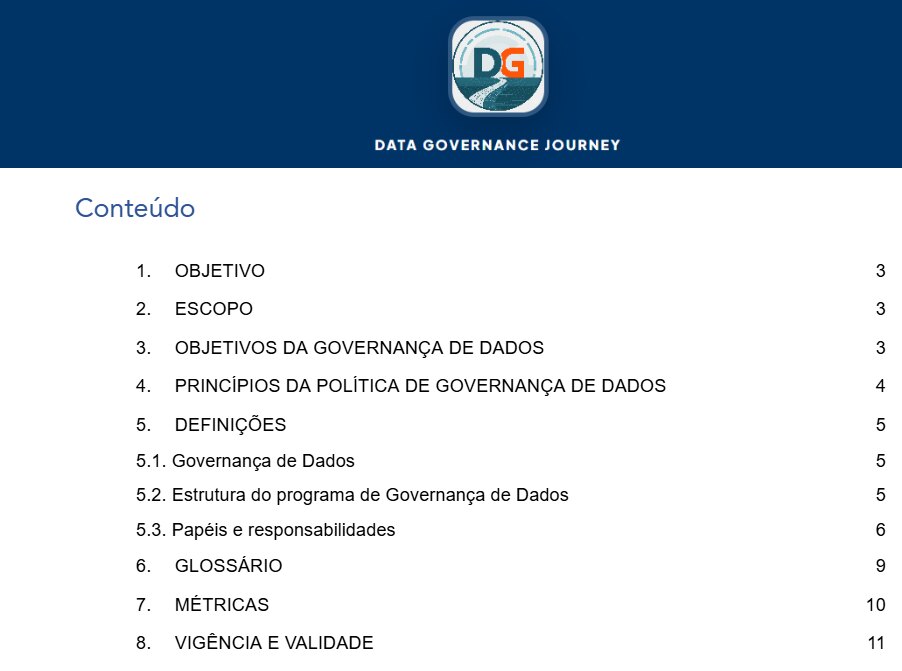
Screenshot of the real template, in Portuguese Data governance policy
The programme’s founding document in Word, already structured: purpose, scope, governance objectives, principles, definitions, roles and responsibilities, glossary, metrics and validity.
- You adapt the text to your company instead of starting from a blank page.
- The structure is the one the board and legal expect to see before they sign.
-
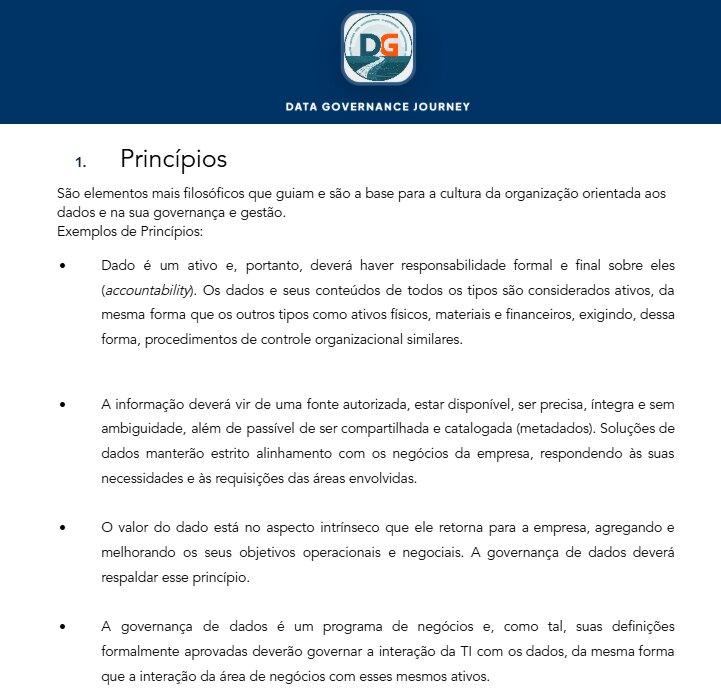
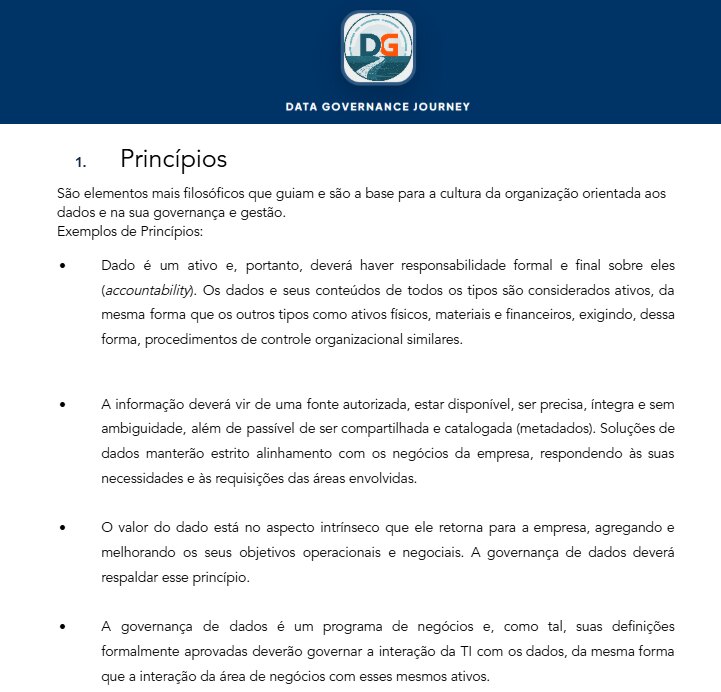
Screenshot of the real template, in Portuguese Data governance principles
The principles a data-driven culture rests on, already written and ready to review with the committee.
- Data as an asset with formal accountability, authoritative sources, business value, and governance as a business programme.
- Written in the register of a corporate document, so it can go straight to approval.
-
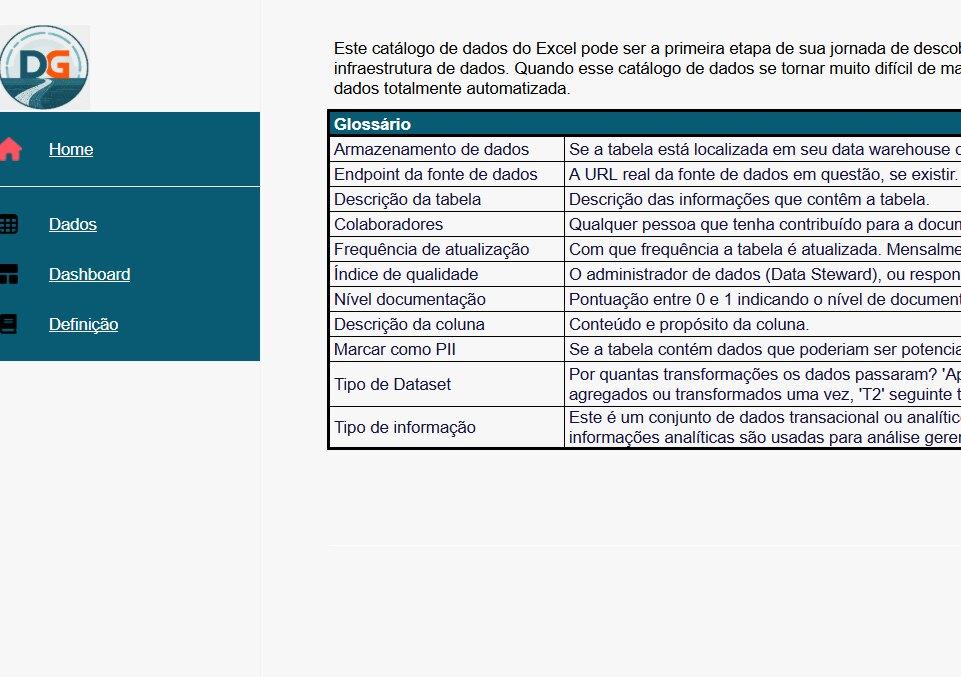
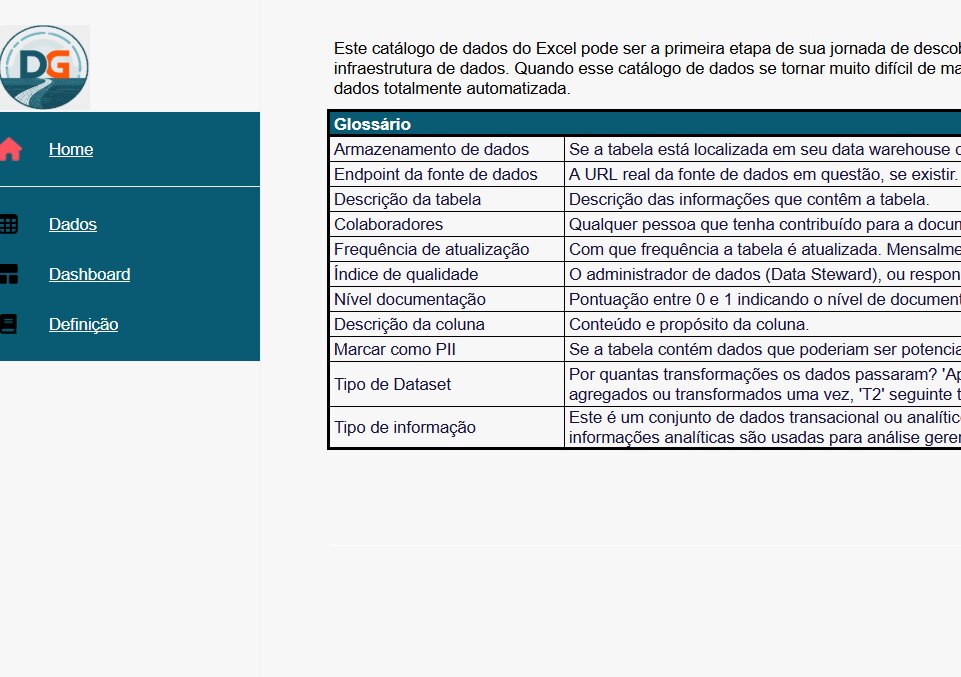
Screenshot of the real template, in Portuguese Data catalogue in Excel
A navigable catalogue — home, data, dashboard and definitions — to start documenting assets before you have a tool.
- A glossary of the fields: storage, source, contributors, refresh frequency, quality score, documentation level, PII flag and dataset type.
- When it gets too big to maintain, it already works as the specification for choosing the tool.
Who teaches it
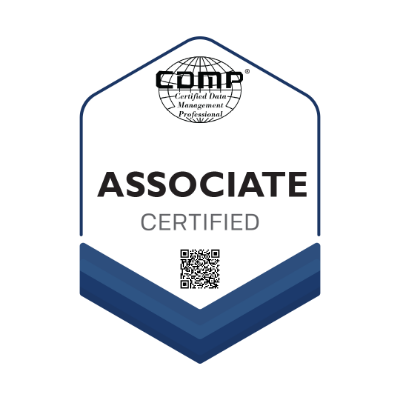
Sandy Bradbury, data governance consultant certified by DAMA International — CDMP Associate level and the Data Management Fundamentals exam. The lessons are the same conversations I have inside projects, including the parts where the honest answer is "it depends who signs". The about page tells the rest with fewer adjectives, and the articles are the longest free sample there is: if the way of thinking in them works for you, the course is the same thing in order and with the files in hand.
Certifications
Questions before you buy
What language is the course in?
The lessons are in Portuguese and carry English subtitles; it is the same course, on the same platform, that is sold in Brazil. The templates, the downloadable materials and parts of the members area interface are in Portuguese. If Portuguese feels too foreign even with subtitles, that is what the seven-day guarantee is for.
What methodology does the course follow?
The Data Governance Journey methodology, the same one set out on this site, based on and guided by the DAMA-DMBOK framework. The three sections of the course are its three pillars: the Compass (foundations), the Engine (operationalisation) and the Heart (culture and change management). The DMBOK says what a governance programme needs; the course shows how to put it in place, in the right order, in a real company.
Who is this course for?
For people who will have to implement governance, not just have opinions about it. Data analysts and managers who have been asked to "get governance off the ground", business people who became owners of a data domain without asking, and consultants who need artefacts that work in a meeting room. If you have never touched the subject, the first section starts from zero.
Do I need technical knowledge or a particular tool?
No. Nothing here depends on a specific platform, and the artefacts are Excel and Word because every company has them. If you already have a catalogue, a quality tool or a data lake, the course fits around them; if you do not, the order of the lessons is precisely the one that stops you buying a tool before you know the question.
How long do I have access?
For life. It is not a subscription, it does not renew and it does not expire, and the lessons stay available in the Hotmart members area whenever you want to revisit them.
Is there a certificate?
Yes, a certificate of completion issued by the platform when you finish the lessons. It is useful for logging training hours or for LinkedIn; it is not a DAMA certification, which is a different thing with its own exam.
What if I do not like it?
You have seven days to request a refund through Hotmart itself, with no justification and without having to talk to me. It is the platform guarantee, and it is a full refund.
Is the AI Governance module included?
No. It is an add-on module, offered separately inside the members area, with five lessons on risk classification, the 5W2H canvas for AI, privacy in training, model cards and algorithmic auditing. It is described on this page so that you know it exists before you buy, not after.
Do I really get the templates that are locked in the library on this site?
Yes, all eighteen, plus two extra templates that are not in the library, as editable Excel and Word files in the members area, in their original Portuguese. The six free ones in the library stay free here, in English, and you do not need the course to download them.
How do I pay?
Checkout is handled by Hotmart, which takes care of payment, access and the invoice. The price is R$199 (Brazilian reais); the platform converts it into your currency and shows the payment methods available in your country.
16 lessons in Portuguese with English subtitles, for R$199
Lifetime access, a certificate at the end, the full library of editable templates (in Portuguese) and 7 days to change your mind without explaining why.